
See the real workload. Assign work sensibly. Support the right people.
A project can stay on schedule while a handful of people carry far too much of it. DearPulse gives managers a clear view of performance scores, working hours and workload, so conversations with the team are grounded in evidence and assignments and support can be adjusted in time.
When everyone looks busy, who is genuinely overloaded?
Imbalances that a progress report cannot reveal need to be seen in the operating context of the whole team.
Work piles onto a few people
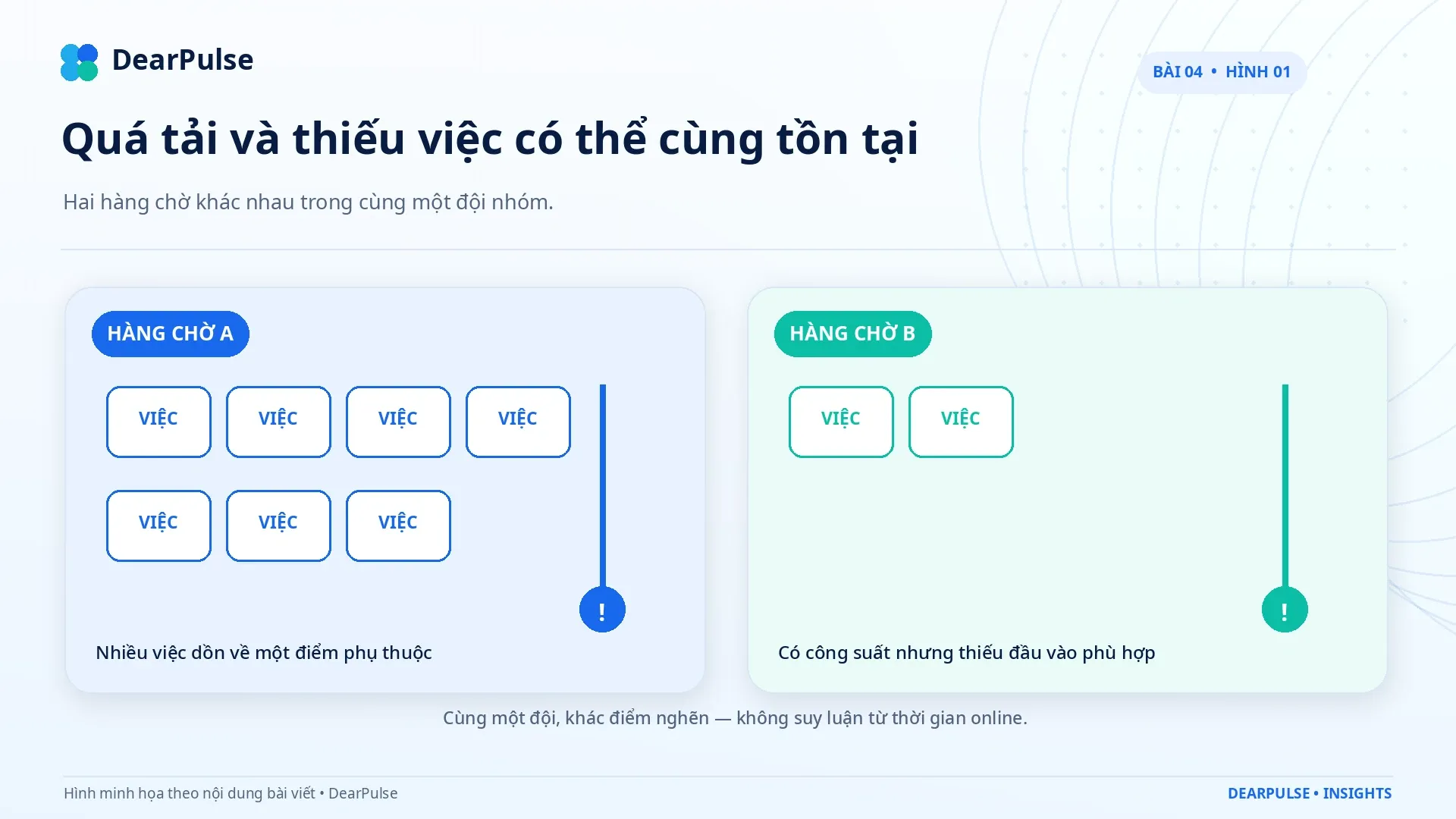
Experienced team members tend to absorb extra work to keep things moving. If you only look at end-of-period results, it is hard to see the workload gap quietly building inside the team.
Overload is noticed too late
A team can still deliver on time through overtime and constant improvisation. By the time quality or morale starts to slip, course-correcting has become much harder.
Focus time gets chopped up
Meetings, coordination and ad-hoc requests eat into the time needed to actually do the work. More hours on the clock will not necessarily clear the bottleneck.
Performance analytics and workload balancing
When work is distributed poorly, neither the overloaded person nor the one with spare capacity can do their best work. DearPulse lets you review the performance scores, hours and workload of the people you manage, giving you a basis for practical conversations and adjustments.
Spot workload gaps inside the team: compare workload against the targets you have set to see who needs support and where to look closer.
Assign work with data and context: combine the metrics with real tasks, skills and feedback from your team to weigh up the right adjustments.
Win back time for what matters: review meeting duration and person-hours to rethink the coordination calendar and stop work from being chopped up.
Follow up after each change: revisit performance and workload trends to judge the impact of the new assignment model.
See it in action: spotting imbalance with the workload map
Screenshots taken straight from DearPulse
A look at team performance and workload inside DearPulse. Real product screenshots will be added in the frames below.

Screenshot 01 · Team performance
A screenshot of the team performance view will be added here.
Screenshot 02 · Workload level
A screenshot of the member workload view will be added here.
What managers and their teams gain
Not just another report, but a real basis for adjustments that match how the work actually runs.
Spot who needs support, sooner
A clear view of workload gaps lets you reach out before small problems drag on. The data opens a specific conversation about tasks and resources.
Smarter assignment decisions
Weigh workload against data, skills and real deadlines. Stop defaulting to the people who always say yes fastest.
Protect the team's working rhythm
Review the meeting calendar and coordination time to carve out focus blocks for important work. Track the results afterwards to find the setup that suits your team.
A deeper view for managing performance and balancing workload
Put the data in the right role, the right context and the right department reality to support management decisions.
01 · Built for the manager's point of view
Track aggregate scores, hours and workload within your granted scope. The view is designed for work conversations; individual application and website details are not shown to managers in Performance mode.
02 · Measurement tailored to each department
Leaders can set weights that suit teams needing deep work or fast response. Scores are read alongside the formula and targets in force, which avoids mechanical comparisons.
03 · Workload and coordination rhythm in one view
Combine workload with meeting duration, person-hours and performance trends to examine how the team operates. You get a real basis for adjusting calendars and assignments instead of only looking at total hours.
Everything you need to manage team performance and workload
Metrics and tools that help managers spot issues, hold grounded conversations and follow up after each adjustment.
Know where your team stands
Review performance scores, hours and workload for the people in your scope. You get a shared picture to prepare conversations, instead of relying on gut feel.
Spot workload gaps
Compare workload against the targets you have set to see where to look closer. Verify against actual tasks before deciding on support or reassignment.
Evidence-based assignment
Combine the data with skills, task difficulty and delivery deadlines to weigh up how work is distributed. DearPulse supplies the view; the manager still decides based on the team's context.
Review meeting time
Track meeting duration and person-hours to see how the coordination calendar consumes capacity. You get a basis for reshaping the calendar and protecting time for important work.
Assessment tuned to each department
Leaders can set weights that match how each department works. When reading team scores, always place the metrics inside the formula and targets in force.
Follow up after each change
Revisit performance and workload trends after changing calendars or assignments. Cross-check against quality, progress and feedback to see which changes are worth keeping.
Balance your team's workload in 3 steps
Three steps for using data as the starting point for better conversations and better collaboration inside the team.
01 · Review the data in your scope
Look at each member's score, hours and workload; check the targets and formula in force. Identify the gaps worth discussing.
02 · Talk before you reassign
Clarify tasks, difficulty, deadlines and blockers. Then weigh up changes to workload, meetings or the support people need.
03 · Track the impact of the change
Revisit workload and performance trends alongside quality, progress and feedback. Keep adjusting as reality shifts, rather than treating one reassignment as the final answer.
Frequently asked questions
Within the capabilities described here, DearPulse provides performance, time and workload data to support the manager's judgement. Decisions about reassigning work still need to rest on tasks, skills, deadlines and conversations with the people involved.
Balanced workloads start with a clearer view
Book a demo to see how DearPulse helps managers understand their team, hold grounded conversations and adjust assignments to fit reality.